|
Prosticks Articles
Hong Kong Economic Journal --- 21 Aug, 2000
Resistance Broken With Heavy Volume Uptrend Resulted
Today we will try to apply the Prosticks concepts we
have discussed so far to account for or forecast the
behavior of two currencies.
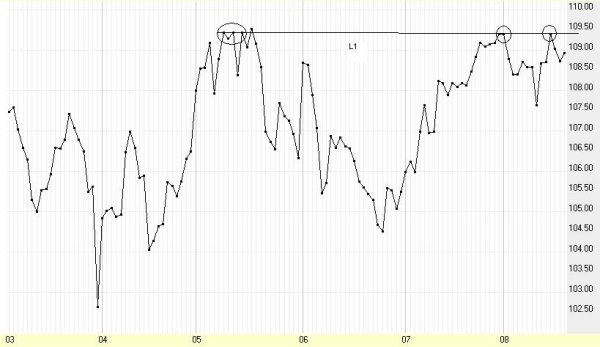
Figure 1 shows the Modal line chart of the Dollar Yen.
As can be seen, there are six Modal Points occurred at
previous market tops lying at the same price of 109.45,
forming a Modal Platform L1. This Modal Platform is
a very strong resistance level. Whenever price rose to
this level, severe selling pressure occurred, pushing
price downwards. Therefore, it can be anticipated that
this 109.45 is going to hinder upward price movement of
the Dollar Yen in the future. However, if this level is
broken, an uptrend will result. Notice that when we say
that a resistance is broken, we do not mean only that
intraday price succeeds in rising above it. Rather, we
require the Modal Point of the day to stay above the
level.
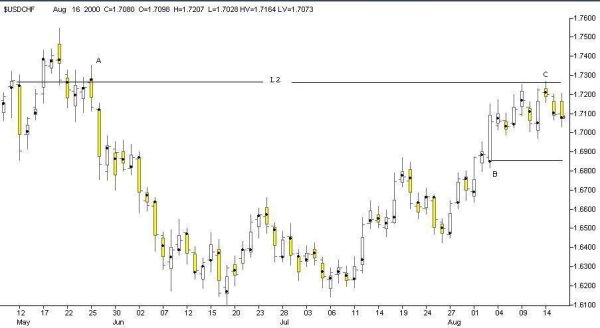
Figure 2 shows the Prosticks chart of the Swiss Francs.
As can be seen, the rally which began in June from 1.62 is
hindered by the Modal Platform L2. L2
connects two Modal Points together at the same price of
1.7265. In particular, L2 contains the Modal Point
of bar A. Why bar A is important? It is
because bar A is the first bar which began the
downtrend in which price fell from 1.75 to 1.62. That
means strong hands started selling there, particularly at
the Modal Point. Therefore, when the subsequent uptrend in
June carries price back to the Modal level of A,
these strong hands resurfaced, imposing resistance on
prices. The fact that the Modal Point of A has the
same price as the other Modal Point lying on the platform L2
further confirms its significance.
Notice that bar B is a strong rally bar. After B,
price consolidates in the 1.70-1.725 range. It can be
anticipated that if price fails to break the resistance at
L2 and falls subsequently, the Modal Point of B
should act at least a temporary support level.


|